
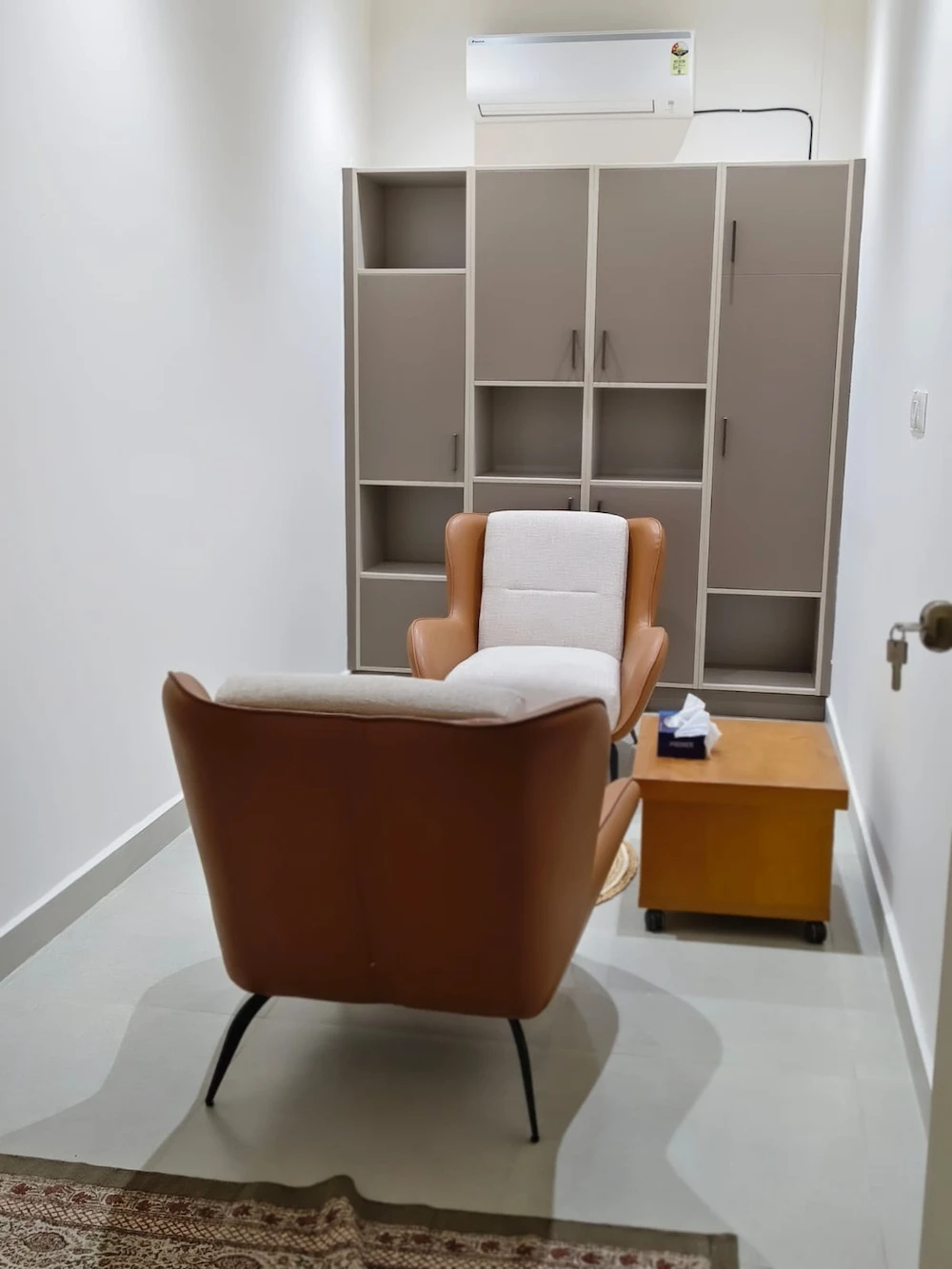
Most therapists who want to start a private practice in Chennai hit the same problem early: the room. Leasing a clinic means a deposit, a monthly rent, furniture and a long commitment, all before you know how many clients you’ll see. For a counsellor leaving a hospital job, or a psychologist who wants to see private clients two evenings a week, that’s a lot of fixed cost for an uncertain start.
There’s another way to begin. You can book a private therapy room by the hour, see clients there while your practice grows, and decide on a lease later. This guide walks through the steps of setting up an independent practice in Chennai, from checking your credentials to choosing where to see clients. It isn’t legal or tax advice. Where rules apply, we point you to the body that can confirm them.
Before You Start a Private Practice as a Therapist in Chennai
The first question is what you’re qualified and registered to call yourself, because that shapes what you can offer and how you describe your services.
Clinical psychologists: RCI registration
Clinical psychologists are one of the professional categories regulated under the Rehabilitation Council of India Act, 1992. The Rehabilitation Council of India’s norms state that only professionals with a recognised qualification who are enrolled on the Central Rehabilitation Register may practise as rehabilitation professionals in India. Registration is done online, and the RCI asks professionals to register within six months of completing an approved course, with a penalty for late registration.
The Mental Healthcare Act, 2017 also defines a clinical psychologist in Section 2. The definition covers a person with a recognised qualification in clinical psychology from an RCI-recognised institution, or a postgraduate degree in psychology, clinical psychology or applied psychology together with a two-year MPhil in clinical psychology or medical and social psychology that includes supervised clinical training. If you plan to use the title “clinical psychologist”, check your registration status with the RCI first.
Counsellors, psychotherapists and coaches
Counsellors and psychotherapists who aren’t clinical psychologists aren’t named as a separate category in the Mental Healthcare Act, 2017, and the rules for their practice are less settled. If you hold a counselling or psychotherapy qualification, check with your training institution and the professional association you belong to about the titles you can use, the scope of your practice and the code of ethics you’re expected to follow. Life and career coaches should keep their services clearly separate from mental health treatment.
Whatever your qualification, be clear on your website and intake forms about what you offer and what you don’t, and have a referral route ready for clients who need a psychiatrist or crisis support.
How to Start a Private Practice as a Therapist in Chennai: Step by Step
Step 1: Define your practice
Decide who you’ll work with and how. Individual adults, couples, children and adolescents, or groups each need different skills, intake processes and room setups. Decide on session length, whether you’ll offer in-person sessions, online sessions or both, and which days and times you’ll be available. Starting with a few fixed slots a week is easier to manage than open availability, and it tells you how many room hours you’ll need.
Step 2: Get your credentials and paperwork in order
Keep copies of your degrees, registration certificates and any professional memberships ready. Some therapy rooms ask for them. The soundproof therapy room in Kottivakkam featured below requires proof of certification at the time of booking. Prepare your intake form, informed consent form and confidentiality policy before your first client, and follow the record-keeping guidance of your professional body.
Step 3: Sort out tax and accounts
Private practice income needs to be accounted for. Whether GST applies to your sessions depends on how your services and qualifications fit the health care exemptions in GST law, and advance rulings on psychology-related services have not all gone the same way. Speak to a chartered accountant before you set your fees, and keep a separate bank account for practice income and expenses from the start.
Step 4: Decide where you’ll see clients
There are three common options when you start out.
Seeing clients at home. It has no room cost, but it’s hard to keep private, and some clients may be less comfortable visiting a home. It also puts your address on every appointment confirmation.
Leasing a clinic. A clinic of your own gives you full control of the room, but you pay rent whether you see two clients a week or twenty, plus a deposit, furniture and maintenance. It makes sense once your caseload is steady.
Booking a therapy room by the hour. You pay only for the hours you use, the room is already furnished, and you can choose a neighbourhood close to your clients. The trade-off is that you work around the room’s availability and house rules. For a new practice, it’s the lowest-commitment way to begin.
Step 5: Set your fees and policies
If you rent by the hour, your room cost per session is easy to work out, so build it into your fee along with your time, supervision costs and tax. Write a cancellation policy that covers late cancellations and no-shows, since you’ll still pay for the room. Leave a buffer between clients: some rooms give you a short window before and after your booking, and some charge for overruns.
Step 6: Build a referral base
Referrals are one of the main ways a new practice grows. Let your former colleagues, supervisors, psychiatrists, general physicians and school counsellors know you’re taking private clients, and the kind of work you do. A simple website or professional profile with your qualifications, areas of focus, location and booking method helps referrals turn into appointments.
Step 7: Keep up supervision and peer support
Working alone removes the informal support of a hospital or clinic team. Arrange regular supervision, and consider a peer group with other independent practitioners in Chennai. It protects your clients and helps you stay in practice for the long term.
Therapy Rooms in Chennai You Can Book by the Hour
These three rooms are listed on Spottle for therapy and counselling sessions. All three show a starting price on the listing page, so we’ve included it.
Therapy Room for One-on-One and Small Group Sessions, Kottivakkam
This private therapy room in Kottivakkam holds up to three people and has natural light, AC, Wi-Fi, drinking water, a kettle, and tea and coffee. Individual therapy, couples counselling, small group therapy and child and adolescent counselling are among the uses the host lists. The entrance and hall have CCTV, but the therapy room itself isn’t under CCTV.
You get access 10 minutes before and after your booked time, and earlier access or extra time can be arranged with the host if available. The booking should cover your clients arriving and leaving, so plan sessions inside your slot. You can rearrange the furniture as long as it goes back afterwards.
Starting price: from Rs. 450
Works well for:
- Individual and couples sessions
- Child and adolescent counselling
- Therapists starting with a few weekly slots in south Chennai
👉 View the Therapy Room for One-on-One and Small Group Sessions in Kottivakkam
Soundproof Therapy Room for Counsellors and Therapists, Kottivakkam
This 104 sq ft soundproof room is inside a professional clinic setup in Kottivakkam and holds up to six people for group therapy. It’s set up for licensed therapists, psychologists and counsellors, and proof of certification is required at booking. Extra chairs or floor mats can be arranged for couples or group sessions if you ask before booking. There’s AC, drinking water, a pantry and restroom access, and you can use the reception area, powder room and kitchen.
The rules protect client privacy. Videography isn’t allowed, photos can’t be shared on social media, and a “session in progress” sign goes on the door while you work. Water and tea are fine inside, but not food. Each booking has a 15-minute grace period, after which overruns are charged at Rs. 150 per 15 minutes.
Starting price: from Rs. 550
Works well for:
- Clinical psychologists and counsellors who need soundproofing
- Group therapy and support groups of up to six
- Practitioners who want a clinic setting for clients
👉 View the Soundproof Therapy Room in Kottivakkam
Private Meeting and Therapy Room, Mylapore
This private room in Mylapore is set up for therapy and counselling, one-on-one coaching and client consultations. It’s air-conditioned, with Wi-Fi, drinking water and restroom access. It’s a general-purpose private room rather than a dedicated therapy room, which suits coaches and counsellors whose clients are in central Chennai.
The listing doesn’t state capacity or house rules, so ask the host about soundproofing, waiting space and access times before your first session.
Starting price: from Rs. 550
Works well for:
- Counselling and coaching for clients in Mylapore, Alwarpet and Adyar
- Career and life coaching sessions
- Consultations and intake meetings
👉 View the Private Meeting and Therapy Room in Mylapore
Before You Book a Therapy Room
Visit before your first client if you can, and check:
- Sound: can conversation be heard from outside the door?
- Waiting space: where will a client wait if they arrive early?
- Access times: how early can you enter, and what happens if you overrun?
- Privacy: where are the cameras, and who else uses the building?
- Certification: does the host need your credentials at booking?
- Comfort: seating, lighting, tissues, water and temperature control
For a wider comparison of rooms, see our guide to private rooms for therapists and counsellors in Chennai.
👉 Browse all spaces in Chennai on Spottle
Frequently Asked Questions
How do I start a private practice as a counsellor in Chennai?
Confirm what your qualification allows you to offer, prepare your intake and consent forms, speak to a chartered accountant about tax, and decide where you’ll see clients. Booking a therapy room by the hour lets you start without a clinic lease and build your caseload first.
Do clinical psychologists need RCI registration to practise?
The Rehabilitation Council of India’s norms state that only professionals with a recognised qualification who are enrolled on the Central Rehabilitation Register may practise as rehabilitation professionals, and clinical psychologists are one of the listed categories. Check your status directly with the RCI.
How do I start a counselling practice in India without a clinic?
One option is to rent a private therapy room by the hour. In Chennai, therapy rooms on Spottle start from Rs. 450 in Kottivakkam and Rs. 550 in Mylapore, and you book only the hours you need without signing a lease.
How much does it cost to rent a therapy room in Chennai?
The three rooms in this guide start from Rs. 450 to Rs. 550. Check each listing for extras such as overrun charges, which are Rs. 150 per 15 minutes after a 15-minute grace period at the soundproof Kottivakkam room.
Can I see clients part-time while I’m still employed?
Yes, if your employment contract allows it. Check for clauses on outside practice or non-compete terms, then book rooms for the evenings or weekends you’re free.
Do I need GST registration as a private therapist?
It depends on your services, qualifications and income, and the rules on health care exemptions are not always clear for psychology and counselling services. Speak to a chartered accountant before you start charging.